Table of contents
- 1. Tiny Land Natural Wooden Baby Walker
- 2. Tiny Land Mud Kitchen
- 3. Tiny Land Organic Play Food Collection
- 4. Tiny Land Modern Family Dollhouse
- 5. Tiny Land Luxury Play Kitchen
- 6. Tiny Land Kids Teepee
- Important Tiny Land Teepee Safety Note
- Are Tiny Land Toys Really Montessori Toys?
- Tiny Land Mud Kitchen or Indoor Play Kitchen?
- What Do Independent Tiny Land Reviews Say?
- What You Should Know About Tiny Land Shipping and Returns
- Which Tiny Land Toy Would I Buy First?
- Final Thoughts: Are Tiny Land Toys Worth It?
You know a toy is doing its job when the box it arrived in does not end up being more interesting than the toy itself.
Parents know exactly what I mean. We buy something covered in buttons, songs, flashing lights, and claims about twenty different learning skills, only to watch a toddler spend forty minutes pretending a wooden spoon is a microphone.
That is why I have become much more interested in toys that leave some of the work to the child's imagination. A kitchen can become a restaurant, grocery store, bakery, café, or veterinary office by lunchtime. A dollhouse can turn into an entire neighborhood. A teepee can be a reading corner on Monday and a spaceship by Friday.
That open-ended approach is a big part of what makes Tiny Land interesting. The brand sells wooden walkers, pretend kitchens, Montessori-inspired toys, dollhouses, play food, outdoor sensory toys, and play tents designed around hands-on play rather than screens.
For this MyStylePicks guide, I looked at Tiny Land's current product specifications, recommended ages, safety certifications, assembly guidance, customer reviews, independent feedback, and recent parent discussions. Tiny Land currently has a 4.4 Trustpilot score from more than 1,600 reviews, with many shoppers praising design, quality, and customer service, although some buyers report assembly problems, damaged parts, or missing pieces.
If you are deciding where to spend your toy budget, these are the six Tiny Land products I would look at first.
1. Tiny Land Natural Wooden Baby Walker
Best for: Babies and young toddlers beginning to stand, cruise, and practice independent walking.
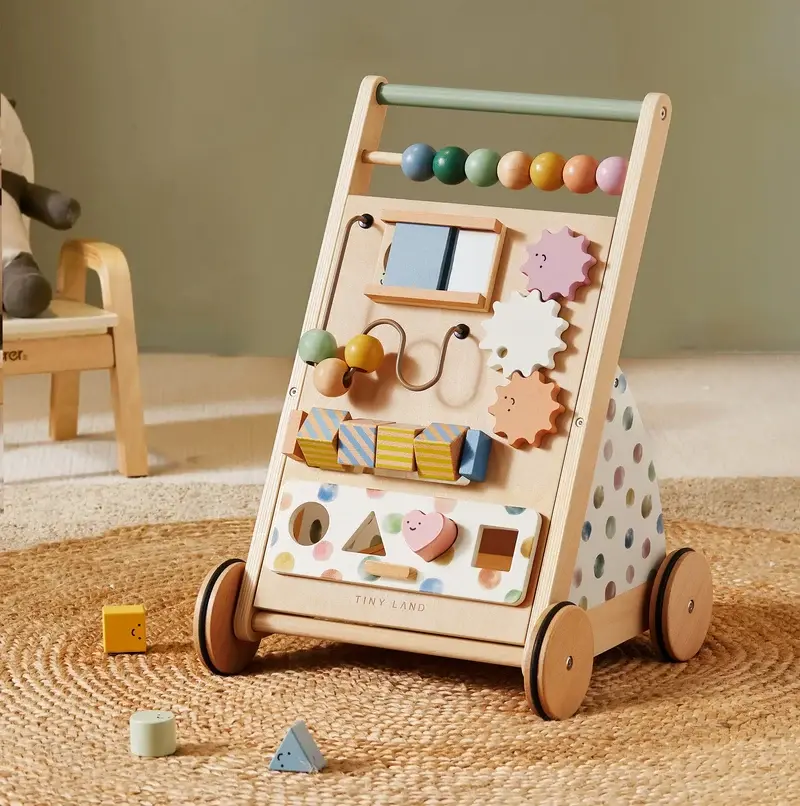
A baby walker is one of those products where cute design should come second to how it actually moves. The Tiny Land Natural Wooden Baby Walker gets my attention because it is a push walker rather than a seated walker, meaning the child stands behind it and practices moving forward while holding the handle.
The walker is made from eco-friendly plywood and solid wood, measures about 13.8 by 14.5 by 20.5 inches, and weighs roughly 8.8 pounds. Tiny Land recommends it for ages 1 year and older and lists ASTM F963, EN71, CE, and CPC certifications for the product.
One of its more useful features is an adjustable screw that changes wheel resistance. Parents can tighten the wheels while a child is still figuring out balance, then reduce the resistance as walking becomes more confident.
It is also more than something to push around the living room. Knobs, gears, and four wooden blocks add fine-motor and sensory activities for the moments when your toddler would rather sit down and investigate everything on the front.
The current product page shows 87 customer reviews, with 89% rated five stars. Several owners mention the adjustable wheels, wooden construction, and activity features as reasons their children continued using it beyond the first few walking attempts.
2. Tiny Land Mud Kitchen
Best for: Toddlers and preschoolers who would happily mix water, dirt, leaves, and absolutely anything else they find in the backyard.
I am convinced a mud kitchen is what happens when adults finally accept that children were going to get dirty anyway.
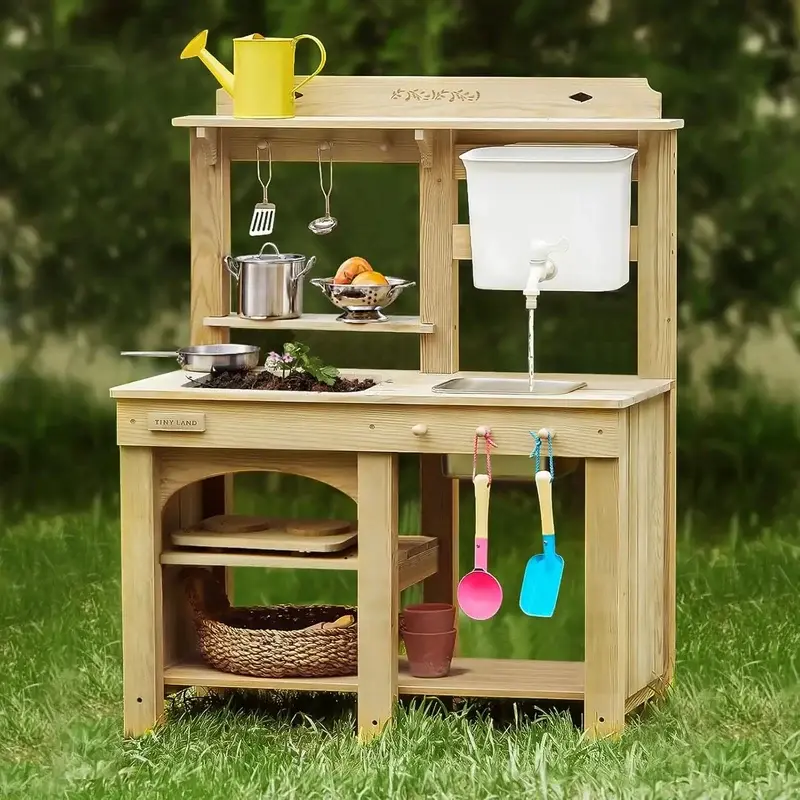
The Tiny Land Mud Kitchen turns that mess into actual play. It has a water tank with a spout, stainless steel basin, stovetop area, pots, pans, utensils, gardening tools, storage, and space for kids to scoop, pour, stir, dig, and invent recipes that nobody should ever actually taste.
The current design is built from ACQ-treated pine with 12mm panels. Tiny Land says the treatment is intended to improve outdoor durability and insect resistance, while the product details list ASTM F963, CE, EN71, and CPC safety certifications.
Tiny Land's product details recommend the Tiny Land mud kitchen for ages 3 and older, although the brand's FAQ describes the broader play range as roughly ages 2 to 8. Because those age notes differ slightly, I would follow the age guidance on the exact product listing and supervise younger children closely.
This is also not a tiny outdoor toy. It measures about 30.1 inches wide, 18 inches deep, and 37.8 inches tall, with an estimated assembly time of 60 to 80 minutes.
The current product page has 77 customer reviews. Owners frequently mention multiple children using it together, with several reviews specifically calling out the water feature as the part that keeps kids interested.
My one piece of advice is to decide where it will live before assembling it. Once the water, mud, sand, leaves, and mystery soup begin, you probably will not want this sitting next to your white outdoor cushions.
3. Tiny Land Organic Play Food Collection
Best for: Kids who already love kitchens, grocery-store games, serving pretend meals, or copying whatever adults are making.
Sometimes you do not need another giant toy. You just need something that makes the toys already sitting in the playroom interesting again.
That is where Tiny Land play food makes a lot of sense.
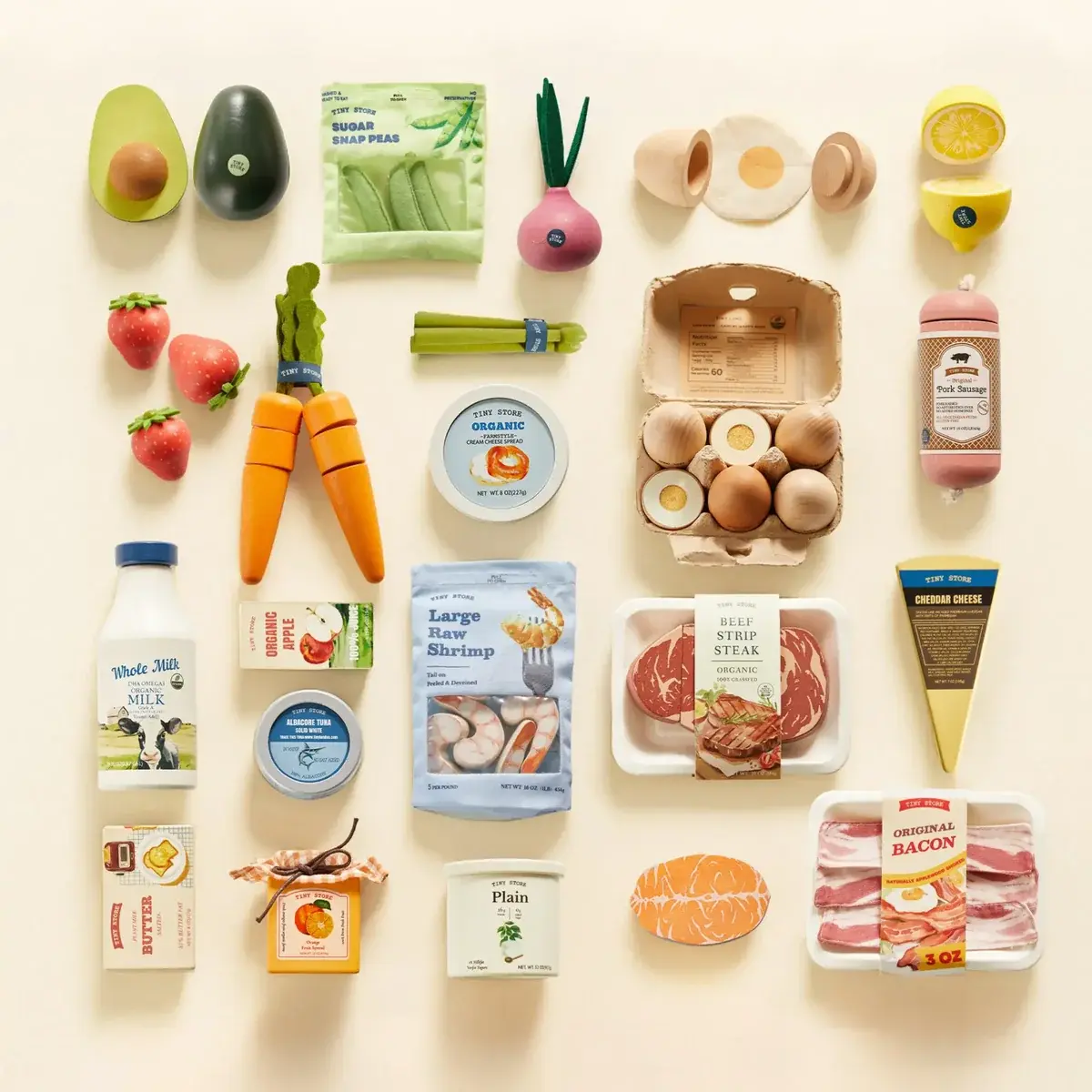
The Organic Play Food Collection includes themed sets built around meat and seafood, dairy, fruits and vegetables, and eggs. Tiny Land uses eco-friendly plywood along with fabric details and designs the pieces to look more realistic than the bright plastic food many of us grew up throwing into toy shopping carts.
Some pieces can be separated and put back together, while details such as pretend packaging and nutrition labels add another layer to grocery-store and kitchen role play. Tiny Land recommends the collection for ages 2 and older.
What I like about Tiny Land play food is that there is no single correct way to use it. Today the avocado is going into a pretend salad. Tomorrow it is being sold at a grocery store. Five minutes later it may be a dinosaur egg because toddler logic has entered the room.
That kind of flexible play is exactly why open-ended toys often stay interesting longer than toys built around one button or one correct response. A recent Reddit discussion from parents made a similar point, with many saying the toys that lasted longest were blocks, figures, play materials, and other items that did not tell the child exactly what to do.
Tiny Land's current play food page shows 113 reviews, with 92% rated five stars. Shoppers often mention the realistic appearance and how frequently their children use the set with play kitchens.
4. Tiny Land Modern Family Dollhouse
Best for: Kids age 3 and older who enjoy storytelling, dolls, furniture, families, and building their own little worlds.
A dollhouse can either become the toy everyone plays with for years or a very expensive piece of playroom furniture.
The difference usually comes down to how much freedom the child has to create stories.
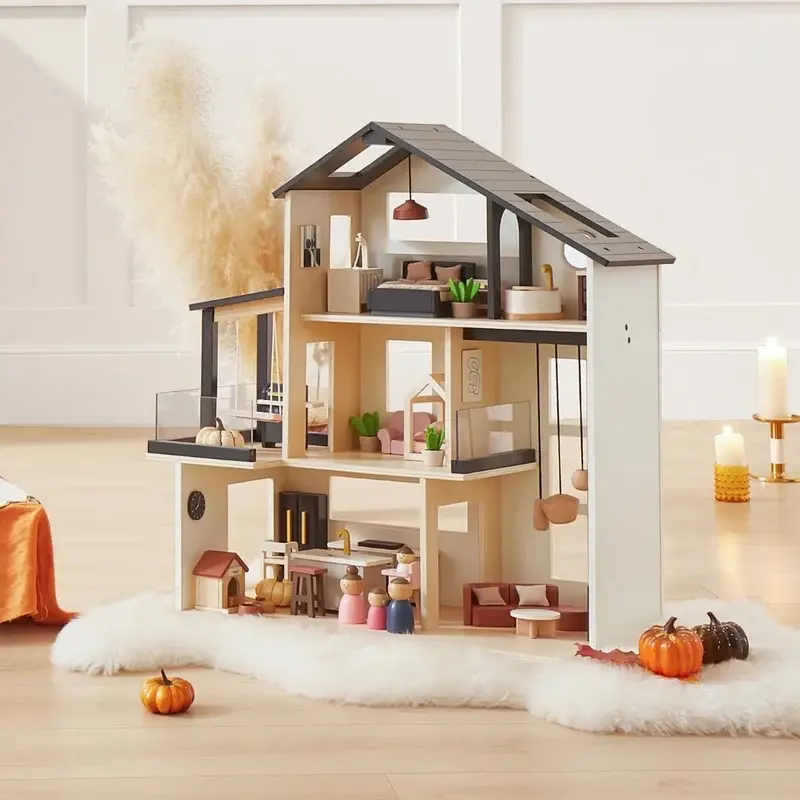
The Tinyland dollhouse, officially called the Sweetwood Edge Modern Family Dollhouse, takes a more contemporary approach than the traditional pink mansion. It uses a modern open layout with multiple rooms, a balcony, furniture, fabric accessories, and a more neutral style that feels less tied to one type of child or one type of story.
The dollhouse measures about 26.8 by 24.5 by 12.2 inches and weighs 26.5 pounds. Tiny Land lists engineered wood construction, a recommended age of 3 years and older, and ASTM F963, CPC, CE, and EN71 certifications.
The product details list 37 wooden furniture pieces plus 10 fabric furniture pieces. That is enough to start playing without immediately needing another shopping trip for beds, chairs, tables, and tiny sofas.
Just know that assembly is not a five-minute Christmas Eve job. Tiny Land rates it as challenging and estimates roughly 50 to 70 minutes for installation.
Customer feedback is strong on the product page, with 168 reviews and 91% rated five stars. Buyers frequently mention the modern look, sturdy feel, furniture, and neutral design, although some also mention needing extra effort or power tools during assembly.
5. Tiny Land Luxury Play Kitchen
Best for: Families looking for a larger indoor pretend-play toy that several children can use over multiple years.
If you have ever wondered whether a play kitchen will actually get used, Reddit parents have surprisingly strong feelings about this.
In several parenting discussions, families describe play kitchens as some of the longest-used toys in their homes. Parents report children returning to them for years, especially when new play food, utensils, restaurant games, and grocery-store ideas are added over time. Of course, other families say their child barely touched one, which is why knowing your child's current interests matters more than any "must-have toy" list.
The Tiny Land Luxury Play Kitchen is clearly designed for the first group.
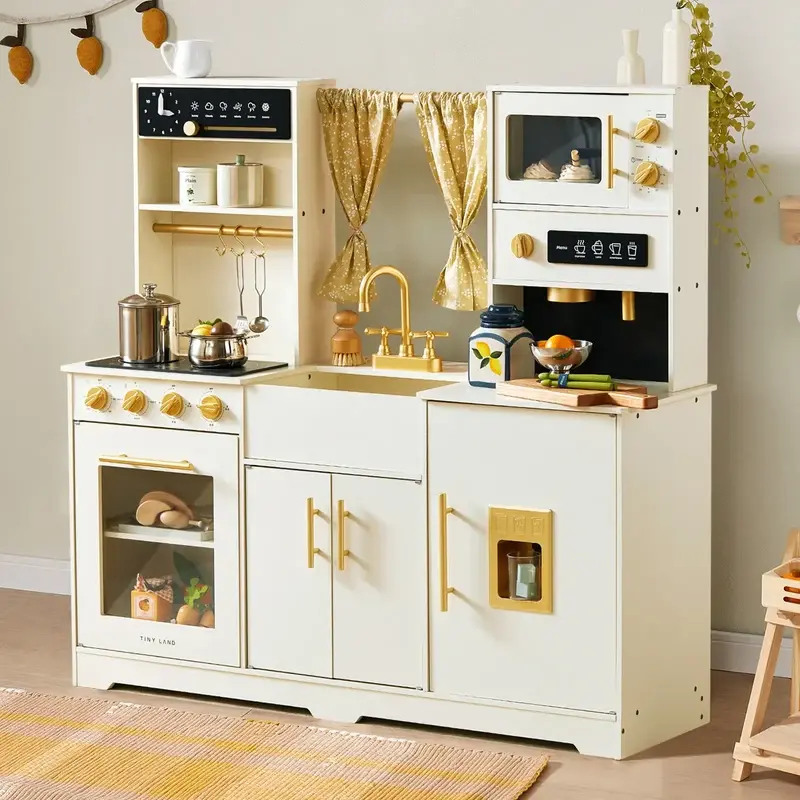
It measures around 42.9 inches wide, 12.6 inches deep, and 40.3 inches tall, so this is a real piece of playroom furniture rather than something you slide into a closet every evening. Tiny Land recommends it for ages 3 and older.
The kitchen includes an opening microwave, freezer, ice maker, magnetic oven door, turning knobs, storage areas, utensil hooks, a faucet, curtains, chef accessories, and enough counter space for shared pretend cooking. The MDF structure uses child-safe paint that Tiny Land says is free from lead and heavy metals, with ASTM F963, CE, EN71, and CPC certifications listed on the product page.
The downside is assembly. Tiny Land currently estimates 120 to 180 minutes and rates the process as challenging. In other words, do not begin building this at 11:30 p.m. on December 24 unless your holiday tradition includes questioning every decision you have ever made.
The current listing has around 260 customer reviews. Positive feedback often mentions appearance, daily pretend play, quality, and multiple children using the kitchen, while independent reviews of Tiny Land occasionally mention pieces arriving damaged or holes not lining up correctly during assembly.
Tiny Land® Iconic Wooden Play Kitchen – Cream Pretend Cooking Set for Kids
6. Tiny Land Kids Teepee
Best for: Reading corners, quiet play, bedrooms, playrooms, and kids who constantly build blanket forts with your sofa cushions.
A teepee is probably the least complicated toy on this list, and that is part of why I like it.
There is no screen, puzzle to solve, song to activate, or correct way to play. Put a few books and pillows inside and it becomes a reading nook. Add stuffed animals and it becomes a sleepover. Throw a blanket over the entrance and suddenly nobody over the age of six is allowed inside.
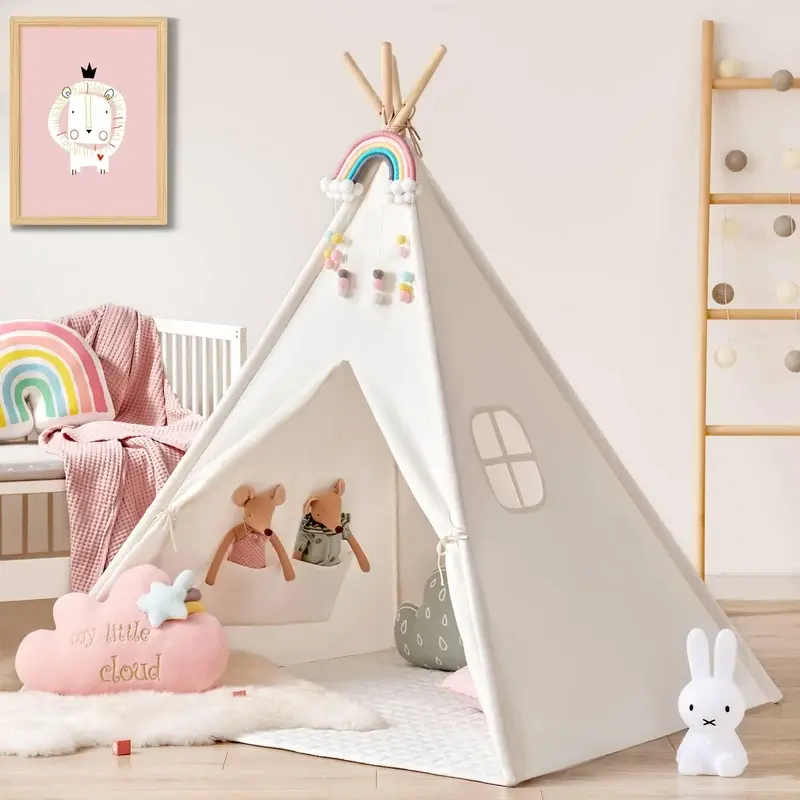
The current Tiny Land Kids Teepee uses thick cotton canvas, solid pine poles, and a padded 0.5-inch non-slip mat. Tiny Land recommends it for ages 3 and older and lists ASTM F963, CPC, and CPSIA certifications.
The listing puts the footprint at roughly 48 inches and the assembled height around 63 to 66 inches depending on where you read the specifications. It also comes with fairy lights, a storage bag, poles and connectors, and takes around 10 minutes to assemble according to Tiny Land.
The product page currently shows more than 250 reviews, with 93% rated five stars. Owners often mention the canvas quality, simple setup, and using the tent as a quiet reading or play space.
Important Tiny Land Teepee Safety Note
There was a Tiny Land play-tent recall in the US on June 4, 2026, so this deserves a clear explanation.
The CPSC recall covered about 7,500 Tiny Land play tents sold from November 2025 through March 2026 that used fiberglass poles which could shed fibers and irritate skin or eyes. The recalled model measured approximately 57 by 52 by 36 inches and carried SKU TLTGTT003BG-XYF1506251.
The teepee linked in this guide is listed as a different current model using solid pine poles, with different measurements and construction. Based on the current listings, it does not match the recalled model description, but anyone who already owns an older Tiny Land tent should check the sewn-in product label against the CPSC recall notice.
Are Tiny Land Toys Really Montessori Toys?
The term Montessori toys gets used very loosely online.
Tiny Land describes parts of its range as Montessori-inspired, and many of these products do share ideas people often associate with Montessori play, including natural materials, simple design, child-sized objects, hands-on exploration, and activities that let children participate rather than simply watch.
That does not mean every wooden toy is automatically a traditional Montessori material. Even parents in Montessori communities debate whether pretend kitchens fit the philosophy, since a stricter practical-life approach may involve helping children safely participate in the family's real kitchen instead.
I would therefore buy these toys because they encourage useful open-ended play, not because the word Montessori appears somewhere in the description. The label matters less than whether your child can explore, imagine, practice skills, and find new ways to use the toy as they grow.
Tiny Land Mud Kitchen or Indoor Play Kitchen?
If you have outdoor space and a child who loves dirt, water, digging, and sensory play, I would choose the Tiny Land mud kitchen. It creates a type of messy outdoor play that is difficult to recreate indoors without immediately regretting your flooring choices.
The Luxury Play Kitchen is the better choice if you live in an apartment, need a year-round toy, or your child already loves pretending to cook while you make dinner. It also gives you more storage for Tiny Land play food, dishes, and accessories.
A 2026 Reddit discussion from a parent with limited space highlighted exactly this decision. Many parents said play kitchens can have years of value, but others noted that using real pots, utensils, or smaller pretend-play setups can make more sense when floor space is limited.
There is no universal winner. The best one is the version your child can actually access and use regularly.
What Do Independent Tiny Land Reviews Say?
Tiny Land's independent review picture is generally positive, but it is not perfect.
As of September 2026, Trustpilot shows Tiny Land at about 4.4 out of 5 from more than 1,600 reviews. Recent US reviewers frequently praise delivery speed, product appearance, quality, and responsive customer service.
The negative feedback is useful too. Some customers report difficult assembly, misaligned holes, damaged packaging, chipped finishes, missing parts, or shipping problems. A smaller group also reports disappointing customer-service experiences.
That pattern lines up with the products in this guide. Many of Tiny Land's larger toys require substantial assembly, so I would open the box and check every panel, screw, and accessory before the night you actually need the toy ready.
The good news is that several recent independent reviews describe customer service sending replacement parts or responding quickly when something arrived damaged.
What You Should Know About Tiny Land Shipping and Returns
Tiny Land says it ships from US-based warehouses. Its current FAQ lists standard transit at roughly 3 to 8 business days depending on location, while newer product pages often say processing takes around 1 to 2 business days with delivery usually around 3 to 7 business days after shipment.
There is one return-policy detail I would double-check before ordering. Current product pages advertise a 30-day money-back guarantee plus a 90-day warranty for quality issues, while Tiny Land's separate refund-policy page refers to a 90-day return guarantee for qualifying unused merchandise.
Because those pages are not perfectly aligned, check the terms shown for the exact product at checkout and keep the packaging until you know you are keeping the toy.
Which Tiny Land Toy Would I Buy First?
If I were shopping for a child around age 3 or 4 and had a backyard, the Tiny Land Mud Kitchen would probably be my first pick. Water, dirt, tools, pretend cooking, gardening, and sensory play give kids a lot of different directions to take the same toy.
For indoor play, the Luxury Play Kitchen paired with a smaller selection of Tiny Land play food has the strongest long-term potential. Reddit parents repeatedly say one reason play kitchens last is that you can keep changing the game without replacing the main toy.
The Tinyland dollhouse is the better choice for a child who already spends time creating stories with figures and furniture. The baby walker makes more sense much earlier, while the teepee is a nice choice when your goal is giving a child a quiet space rather than adding another activity station.
Basically, do not buy the toy that looks nicest in the playroom photo. Buy the one that matches what your child is already trying to do.
Final Thoughts: Are Tiny Land Toys Worth It?
What I like most about Tiny Land is that its better toys do not need to perform for the child.
The Tiny Land mud kitchen gives kids water, tools, dirt, and a place to invent things. The Luxury Play Kitchen and Tiny Land play food turn everyday family routines into pretend play. The Tinyland dollhouse creates a blank stage for stories, while the wooden walker gives younger children something physical to explore as they practice movement.
That is also where the Montessori-inspired side of the brand makes the most sense. The best Montessori toys are not necessarily the ones with "educational" stamped across the box. They are often the toys that let a child do more of the thinking.
Tiny Land is not perfect. Some independent buyers mention assembly frustrations, damaged pieces, or shipping issues, and the 2026 CPSC tent recall is something existing tent owners should take seriously. At the same time, the brand currently has strong independent review scores, clear safety certifications listed across these featured products, and a large amount of positive feedback around product design and customer support.
So my advice is simple: match the toy to your child's actual interests, check the recommended age, read the assembly time before gifting it, keep the packaging until you inspect every part, and do not buy something just because it will look good in a beige playroom.
The prettiest toy is not automatically the best one.
The toy that keeps becoming something new usually is.